… Marketing Shorts to Remember

March 2026 Newsletter #3: Social Media 101
Social Media has become a necessary part of a business’s marketing and advertising plan, with low-cost options and high audience reach when done correctly. A suggestion of three different social media minimums, each with a different medium base, is generally recommended. Creating the initial account may not be difficult, but maintaining content consistency is essential. Today’s newsletter will have bonuses throughout to tickle the marketer in you!
What does social media need to drive?
The main reason social media was created is to reach the intended audience, track your ROI, and build a strong ever-growing organic base. Most of it is intended to be non-expensive or free. The expense will be incurred through paid content boosting at the account owner’s request. It can create a path of business branding with long-term effectiveness if done correctly. Some social media content has a time frame before it expires, while other posts are up indefinitely. Which is more useful for you, or are you looking for short-term reels? It once again revolves around the audience base and the time allotted to create fresh, consistent content.
The chosen platform bases vary, focusing more on single images, words, or videos. What is the competition using, and can you do better to attract new loyal customers from them? The quantity of content is not always as important as its quality. The correct mix will drive sales and acknowledge new and current customers. There might be some trial and error in finding the balance, so make sure to give each medium time to develop.
2026
2026 should focus on conveying authenticity and community. Every year, new challenges arise, such as one of the big challenges for 2026: integrating more AI tools to achieve personalization. Remember, it is just a tool, and if left unguided by a human hand, may result in unplanned or inconsistent messaging. There is also an increased importance of SEO/video, depending on the platforms used.
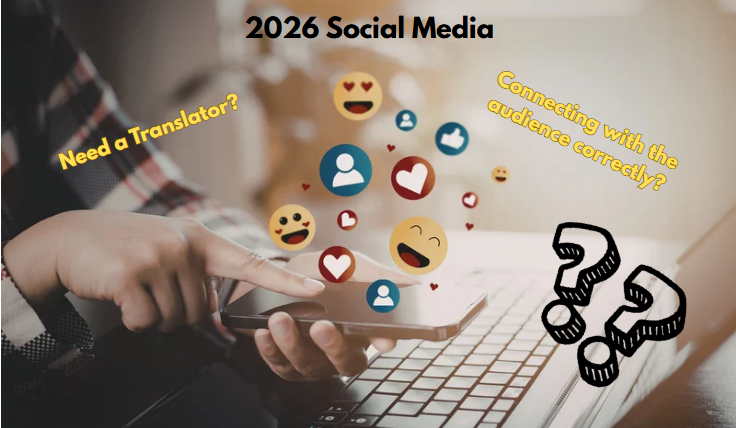
Advertising Plan 2026
2025 was a time of AI experimentation. I also delved into a number of additional social media platforms, helping to further the experiment and better prepare me for my customers. The new advertising plan for 2026 may need to be completely revamped. 2026 is now steadily rolling through. It has fully developed into, and will be identified as an “agentic AI execution”.Now AI is acting as anautonomous agent. It handles complex planning, activation, and real-time optimization. The expanded AI tools have a wide array of options for the marketer (creator) playground. Some of the key industry trends in 2026 also include:
- Agentic AI & Conversational Search: The basic days of word searching a browser are moving toward “Generative Engine Optimization” (GEO). Basic Engine Optimization is fading into the background.
- Authenticity Spotlight: AI-generated content is everywhere. The challenge is to identify the authenticity and storytelling of original content over automation. Have you embraced authenticity in your social media?
- Beating Digital Fatigue Therapy: With the growth of Digital presence, the branding strategy is moving toward more in-person activations, like “micro-events”. (Micro-events are small, curated, and highly focused gatherings that typically host 10 to 80 people and are designed to foster deep, meaningful engagement rather than large-scale, passive interaction. With their high ROI and lower costs, these events -i.e., workshops, VIP dinners, roundtables- are on the rise. I myself have side-worked as an Event Specialist over the past decade, and it seems in line with what is now termed Micro-events.)
- Third-Party Cookies and Privacy Regulations: AI has become the norm. AI algorithms now enable real-time, personalized ad targeting, predictive modeling, and creative optimization, allowing brands to maintain engagement without relying on invasive tracking.
Does your business still follow a traditional agency model? How are you embracing a smaller, more specialized, tech-enabled team within your model? Adjusting your services? Are you on the AI train and headed to the next station? This year advertising will be a bigger challenge without that extra burst of creative energy that goes beyond a simple reach.
Bonus 1: 4 C’s of Social Media (Source: AI Overview)
The 4 C’s of Social Media—Content, Connection, Conversation, and Community—form a foundational framework for effective digital engagement. They emphasize creating valuable content, building relationships with followers, actively engaging in dialogue, and nurturing a dedicated, loyal user base.
The 4 C’s Breakdown:
- Content (The Foundation): High-quality, relevant material that educates, entertains, or informs the target audience.
- Connection (The Reach): Building relationships with users, influencers, and partners across various platforms.
- Conversation (The Interaction): Engaging in two-way dialogue, listening, and responding promptly to user feedback.
- Community (The Goal): Fostering a dedicated, loyal group of followers who share common interests, which can drive brand advocacy.
Bonus 2: 7 Blocks of Social Media (Source: AI Overview)
The 7 functional building blocks of social media, often referred to as the Honeycomb Model, are: Identity, Conversations, Sharing, Presence, Relationships, Reputation, and Groups. Developed by Jan Kietzmann, this framework helps organizations analyze user engagement, tailor strategies, and understand the functional impact of different platforms.
Detailed Breakdown of the 7 Blocks:
- Identity: The extent to which users reveal their personal or organizational identity (profiles, bios, avatars).
- Conversations: The degree to which users communicate with others, including comments and replies.
- Sharing: The extent to which users exchange, distribute, and receive content (photos, videos, links).
- Presence: How users know if others are available or accessible (e.g., location check-ins, “online” status).
- Relationships: How users relate to each other (friends, followers, connections).
- Reputation: The standing of users and their content (ratings, likes, trust, reviews).
- Groups: The extent to which users form communities or are ordered into sets (e.g., LinkedIn groups, Facebook groups).
These blocks are not mutually exclusive; rather, they work together to form a holistic, connected social media experience, where, for example, conversations often fuel reputation, and sharing facilitates relationship
Bonus 3: 30-30-30 Content Rule (Source: AI Overview)
The 30-30-30 content rule is a social media strategy designed to build an engaged, authentic brand presence by balancing content types. It generally recommends allocating 30% to personal/brand-focused content, 30% to curated or industry-focused content, and 30% to fun, engaging, or interactive content, with the final 10% for direct promotions.
Key Aspects of the 30-30-30 Content Rule:
- 30% Original/Brand Content: Focuses on your brand story, behind-the-scenes moments, values, and original, educational, or entertaining content, as detailed on the Shopify Community and the Instagram post.
- 30% Curated/Other Content: Involves sharing industry news, user-generated content (UGC), partner highlights, or insights from others in your field, say The Real Social Company and Instagram users.
- 30% Engagement/Fun Content: Designed to spark conversation and connection through interactive posts, such as polls, questions, memes, or interactive storytelling, per the Instagram post and LinkedIn post.
- The Final 10% (Optional/Bonus): Often used for direct promotion, sales, or spontaneous, real-time engagement.
Benefits:
- Increased Engagement: By reducing self-promotion and focusing on variety, audiences are more likely to interact.
- Builds Authority: Curating industry content positions you as a knowledgeable leader.
- Humanizes the Brand: Behind-the-scenes content builds trust.
Wishes of Growth for Your Ideas and Business as we continue through 2026!
SUBSCRIBE AND READ MY OTHER PREVIOUS NEWSLETTERS AT LINKEDIN!
Phone: 704-746-7248 Email: VAExtraordinaire@aol.com
 Virtual Assistant Extraordinaire